Before delving into the Manicure History, it’s important to comprehend what a manicure truly is.
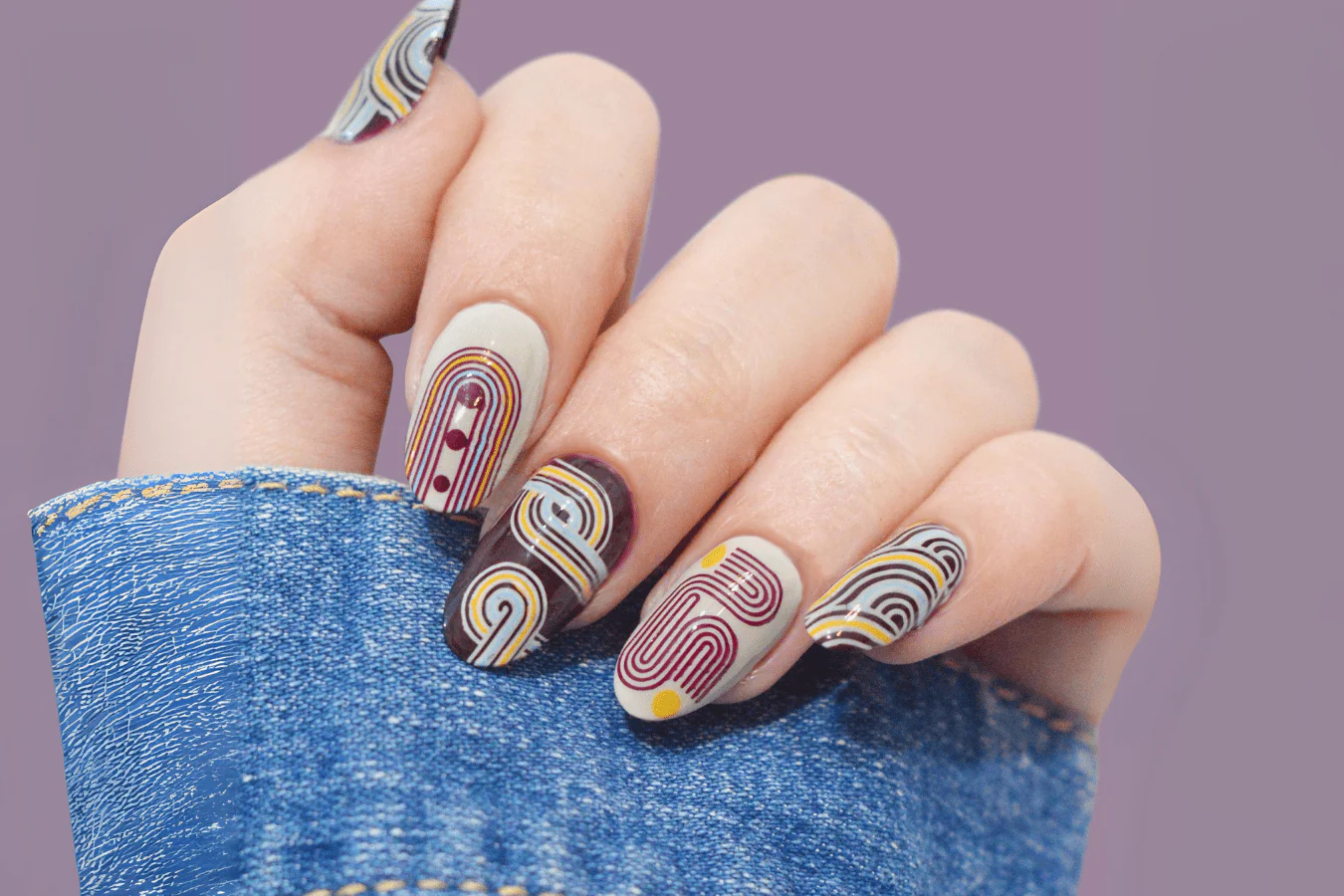
A manicure is primarily a cosmetic beauty procedure for the hands and fingernails done at home or in a nail salon. A manicure typically includes filing and shaping the edges of the nails, pushing back and trimming (with a cuticle pusher and nippers) any dead tissue at the cuticle, removing hangnails, applying various treatments, massaging the hand, and putting on fingernail polish.
When this is done to the toenails and feet, the procedure is called a pedicure. Collectively, the procedures might be referred to as a mani-pedi.
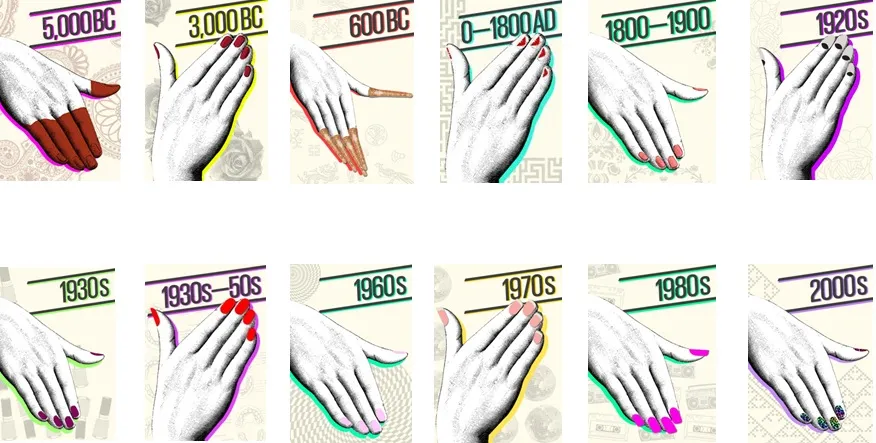
Manicure is truly an artistic practice with a long-standing history. The term comes from the Latin “manus”, which translates to hand, and “cura”, which means care. Contemporary manicures have evolved significantly from their historical origins, incorporating skin and nail care, a variety of painting methods, medical treatments and procedures, in addition to artificial nail application. Historically, they frequently served as indicators of social status. Whether you find it hard to believe or not, individuals have been caring for their nails for over 5000 years!
Three thousand years ago, in Egypt and China, manicures represented the social class you were part of. In Egypt, they solely painted the tips of their nails in vivid colors. These vivid hues were not intended for the peasantry, which could only utilize subtler and more natural shades. The color red was used by Egyptians to signify the highest social standing.
Cleopatra’s nails were colored red and Queen Nefertiti’s nails shone violet. The elite in Babylonia utilized solid gold instruments for their manicures and pedicures – now that’s what we refer to as a royal experience! Nail polish was also used as a type of war paint – military leaders in ancient Egypt and Rome would paint their nails to coordinate with their lips before heading into battle. Similar to many other cosmetics, nail polish wasn’t as associated with gender as it is now.
I will supply the introduction and initial main sections in a format suitable for reuse in an article. To create a complete 3000-word article, we can keep elaborating on the other sections in a similar manner.
Manicure History: The Definitive Guide to the Origins of Manicure and Pedicure;
Have you ever found yourself in a nail salon contemplating the origins of manicures and pedicures? Who was the original person to determine that nails ought to be cleaned, shaped, polished, and maintained? Has nail care always been regarded as a beauty treatment, or did it originate as something completely distinct?
The manicures history spans back much further than many people think. Well before the advent of contemporary nail salons, gel nail polish, and nail decoration, individuals in ancient societies were tending to their nails. What started as a sign of influence, affluence, and social rank eventually transformed into a worldwide beauty market valued in billions of dollars.
Currently, millions of individuals take pleasure in professional manicures and pedicures, yet the history of contemporary nail care stretches over thousands of years.
Who invented manicure and pedicure:
Recognizing the origins of manicure and pedicure enables us to value how various cultures worldwide influenced the nail care practices we observe now.
This comprehensive guide will delve into the roots of manicure, the cultures that shaped nail care, the evolution of professional manicure offerings, the history of the first nail salon, and the notable trends that turned manicures into a global sensation.
What Is a Manicure and Why Is Its History Important?
Before delving into the background, let’s clarify what a manicure is.
Cleaning, shaping, clipping, and adorning the hands and fingernails is known as a manicure. Similar procedures are applied to the feet and toenails during a pedicure.
Manicures are now frequently connected to self-care and beauty. But historically, nail care has been associated with much more than just looks.
Well-kept nails represented the following in various societies:
- Wealth
- Social rank
- Personal hygiene
- Religious purity
- Power and authority
This makes Manicure History an significant part of considerate how beauty standards changed finished time.
Origin of Manicure: Which countries did Nail Care Begin?
When contemplating the beginnings of manicure, one question inevitably comes to mind: which civilization initiated it all?
The response is not confined to just one nation. Numerous ancient civilizations independently created advanced nail care techniques.
Let’s examine these civilizations individually.
Ancient Egypt: A Historic Center for Nail Care
A manicure is primarily a cosmetic treatment for the hands and fingernails done at home or at a nail salon. A manicure typically involves filing and shaping the tips of nails, pushing back and trimming (using a cuticle pusher and cuticle nippers) any dead skin at the cuticles and removing hangnails, along with treatments using different liquids, hand massage, and the application of nail polish. When this process is done on toenails and feet, it is called a pedicure. The procedures are commonly referred to as a mani-pedi.
Why were nails significant in Egypt?
For Egyptians, caring for nails was intricately associated with beauty, authority, and self-identity. Historical records frequently link intricate nail care with renowned figures like Cleopatra and Nefertiti. Men and women took part in nail care practices, establishing Egypt as one of the earliest contributors to the history of Manicure History.
What Tools Did Egyptians Use?
Ancient Egyptians trusted on:
- Copper tools
- Bronze grooming instruments
- Natural dyes
- Henna
- Conditioning oils
These initial tools represent some of the first manicure instruments in recorded history.
Ancient China: When Nail Care Became a Status Symbol
Six hundred years ago, the elite in China would typically paint their nails with gold or silver. Gelatin, wax, rubber, and egg whites were combined to create their nail paints. In order to emphasize the length of their nails—yet another indication of their social standing—women of the Ming dynasty painted their nails in shades of black or vivid red.
Later, they wore nail-shaped finger tips made of precious metal. Additionally, folks in India painted their nails scarlet using reddish brown henna.
By around 3000 BCE, Chinese aristocrats were making nail colors with natural substances like:
- Beeswax
- Gelatin
- Gum Arabic
- Egg whites
- Plant pigments
Why Did Chinese Nobles Grow Long Nails?
Long nails represented affluence as they indicated a release from physical work.
The longer and better kept the nails, the more a person’s social status typically seemed.
Were Specific Nail Colors Prohibited?
Certainly.
Certain dynasties reserved gold, silver, and red hues solely for royalty and the aristocracy. This activity reinforced the link between nail care and social standing.
Ancient Babylon: The Earliest Manicure Instruments
Might warriors be concerned about their nails?
Unexpectedly, they did. Ancient Babylon offers one of the most intriguing periods in the history of manicures.
The Unearthing of Historic Manicure Kits:
Archaeologists found gold grooming instruments that are believed to originate around 3200 BCE. These objects are regarded as among the earliest known tools for manicures ever discovered.
Why did Babylonian men apply nail polish?
Historical records indicate that fighters painted their nails prior to engaging in battle. Various colors were said to signify military rank. This illustrates that manicures were not initially confined to aesthetics; they also represented power and control.
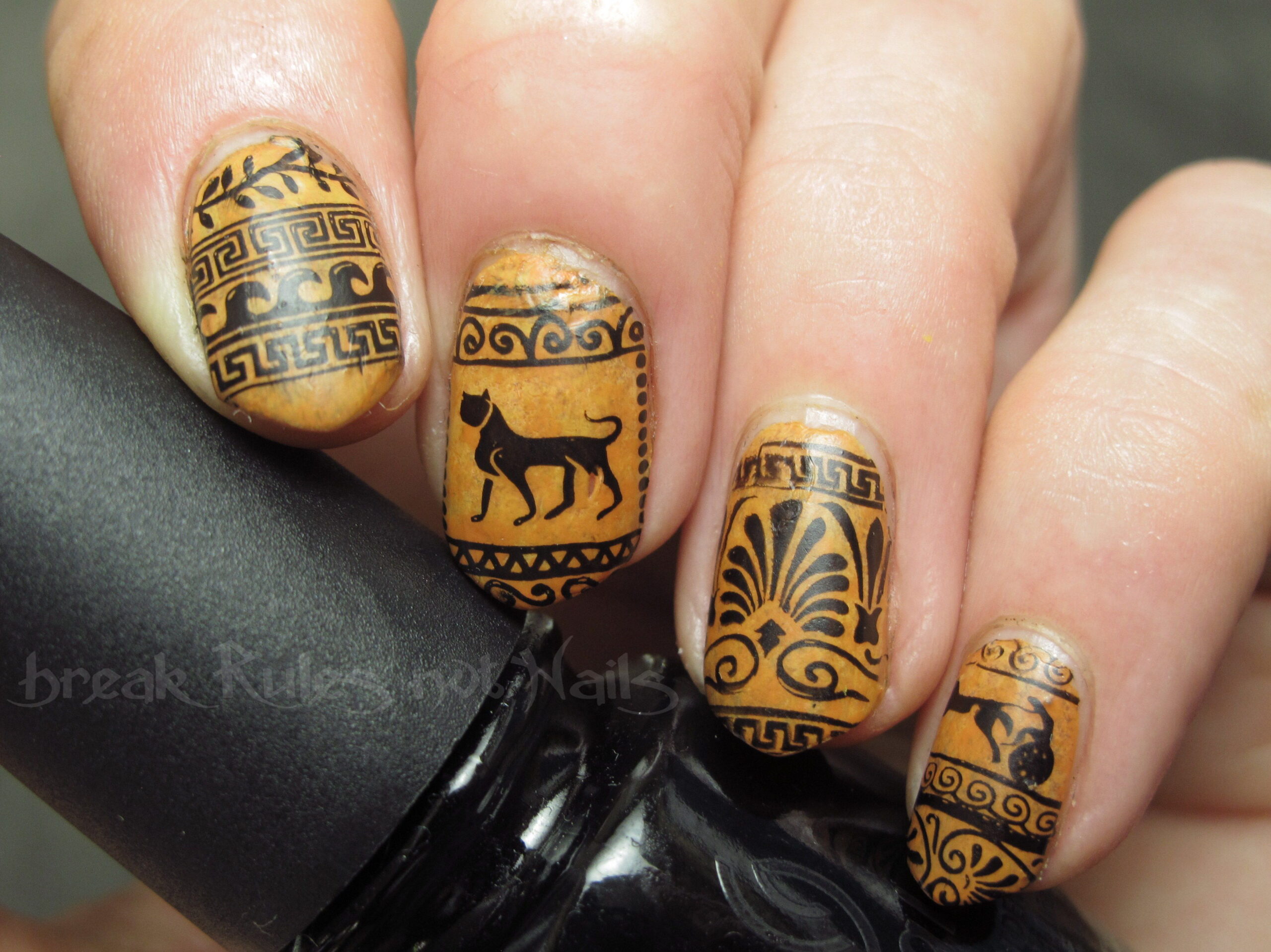
Ancient Greece and Rome: Effective Nail Care
In what ways did Greece and Rome impact nail care?
In contrast to Egypt and China, these societies prioritized cleanliness rather than ornamentation. Properly cared for nails indicated excellent hygiene and self-control.
What Grooming Tools Did They Use?
Greeks and Romans commonly used:
- Small knives
- Nail cleaners
- Bronze implements
- Buffing materials
- Polishing stones
Their emphasis on nail care fostered grooming practices that shaped European beauty customs for centuries.
First Nail Salon:
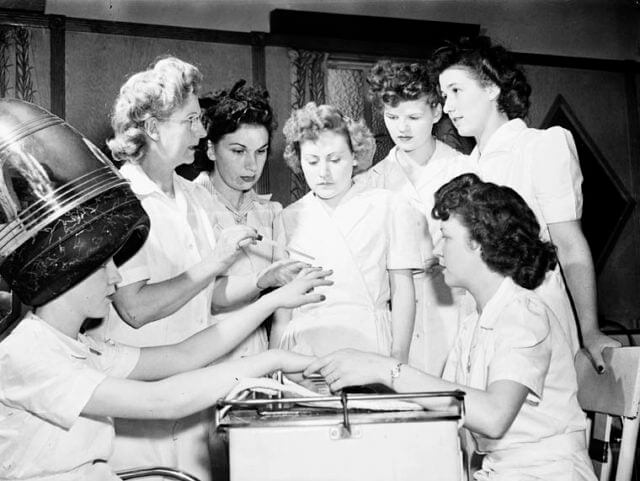
Mary E. Cobb opened the first contemporary nail salon in New York City in 1878. Called Mrs. Pray’s Manicure (and later Mary Cobb), it brought European-style manicures to American consumers and established the groundwork for today’s nail care industry.
History of the First Nail Salon:
Prior to Mary Cobb establishing her parlor, nail care was mostly an indulgence meant for royals or performed by a lady’s maid at home. Cobb transformed the beauty industry through these key achievements:
- European Influence: Cobb acquired unique manicure skills in France and then returned to the United States to share these sophisticated techniques.
- Mrs. Pray’s Nail Salon: Her initial salon opened in Manhattan, providing simple buff-and-shine manicures for approximately $1.25.
- Product Development: She played a key role in introducing the first at-home manicure tutorials in the industry, expanded to other locations such as Boston, and is well-known for creating the emery board.
Cobb’s achievements made manicures shift from an upscale indulgence to a common beauty practice, leading to the rise of large cosmetic companies such as Elizabeth Arden and Revlon.
Who Invented Manicure and Pedicure?
This is among the most commonly posed questions in the history of nail care.
No individual can be credited with the invention of manicures and pedicures. They developed from age-old grooming practices over 5,000 years ago in various cultures. The term “pedicure” comes from the Latin terms pedis (foot) and cura (care).
The development of these nail therapies includes several significant milestones:
- Ancient Origins (c. 3000 BCE): The initial types of manicures originated in India and China, where nobility and the elite employed henna and blends of beeswax, egg whites, and plant-based dyes to color their nails and represent their social standing.
- Ancient Egypt: In Egypt, detailed care for nails and feet was greatly valued. Historical documents indicate that the elite painted their nails red, while Babylonian nobles were recognized for using solid gold implements for their manicures and pedicures.
- The Initial Nail Salon (1878): The first contemporary nail salon was founded in New York City by Mary E. Cobb, who is recognized for bringing the professional manicure to the United States.
- Modern Polish (1920s): Liquid nail polish made its debut with brands such as Cutex in the 1920s, while pioneers like Revlon introduced opaque, Hollywood-inspired shades to the public in 1932.
- The French Manicure (1976): Jeff Pink, the creator of the nail brand ORLY, devised and named the French manicure as a time-efficient method for actresses in film and television.
Varieties of Manicure:
Dip powder Manicures:
Dip powder manicures serve as a substitute for conventional acrylic nails and gel polish. Dip powders have gained popularity because of their simple application. They resemble conventional silk or fiberglass extensions, with acrylic powder substituting the fiber.
Both techniques depend on applying cyanoacrylate over the natural nail and enclosing either the fiber or acrylic powder. Although one layer of fiber is common, several alternating layers of powder and cyanoacrylate can be employed in dip nails.
French Manicures:
Jeff Pink, the creator of the nail brand ORLY, is recognized for developing the natural nail style known as the French manicure in 1976.
In the mid-1970s, Pink was assigned by a film director to create a universal nail design that would prevent screen actresses from needing to redo their nails to match their costume changes. Motivated by the immediate highlighting effect of a white pencil used on the underside, Pink theorized that the answer lay in applying the same neutralizing concept to the top of the nail. “I obtained a gallon of white polish for the tips, and pink, beige, or rose for the nails,” he remembered in a 2014 chat with The National.
The Natural Nail Kit, as it was named by Pink, became popular among film stars and studios that deemed the time-saving approach essential. “The director remarked that I deserve an Oscar for helping the industry save so much money,” he stated. Ultimately, Pink showcased the trend to the runway audience in Paris, and they appreciated it as well. However, he believed it still required a more attractive name. He applied the French rebranding on the flight returning to Los Angeles.
Nails featuring a French manicure are defined by the absence of a colored base and distinct white tips along the free edge. Hence, they are occasionally called French tips. The tips of the nails are colored white, whereas the remaining nails are coated in a pink or an appropriate nude hue. Artificial nails can be used to create French manicures.
Conversely, it is equally prevalent to carry out a French manicure on natural nails. Another method is to brighten the nail’s underside with a white pencil and apply a transparent shade over the whole nail.
Hot Oil Manicures:
A hot oil manicure is a specialized manicure that removes cuticles and hydrates them with oil. Oils suitable for use include mineral oil, olive oil, various lotions, or commercial mixtures in an electric heater.
Lesbians Manicures:
A lesbian manicure (alternatively referred to as a queer manicure, lez nails, or femmi cure, derived from LGBTQ slang terms queer, lez, and femme respectively) is a style or trend of manicure designed to enable lesbians and other queer individuals in the LGBTQ community to securely and effortlessly engage in digital penetration during intimacy.
The most notable and contemporary style of manicure features elongated nail extensions on all fingers except the index finger, middle finger, and occasionally the thumb of the dominant hand, thereby avoiding harm or discomfort to the vulva or vagina during intercourse while still upholding the trend of long acrylic nails in everyday situations. The style is frequently viewed as a public manifestation or emblem of lesbian identity, especially on the femme end of the femme-butch spectrum.
How Did Nail Care Progress in the Middle Ages?
Did the practice of nail care vanish following the decline of ancient civilizations?
Absolutely not.
In the Middle Ages, nail care became less complex and more centered on cleanliness. In numerous areas of Europe, lengthy decorative nails lost their popularity. Well-groomed, neatly clipped nails were viewed as functional and dignified. Even though there were fewer innovations in this time, the practice of nail care persisted.
How Did the Renaissance Renew Nail Aesthetics?
What caused the resurgence of interest in nail care?
The Renaissance honored aesthetics, style, and individual looks. European elites once more adopted grooming practices. Individuals refined their nails with gentle fabrics and occasionally fortified them with organic components like lemon juice.
This era facilitated the connection between age-old customs and contemporary nail care methods.
Development Over Time:
The 20th Century: Chemical and Cultural Revolution:
The introduction of synthetic materials and fast-drying lacquers in the 1900s significantly changed the cosmetics industry.
| Era | Key Innovations & Trends | Impact on Mani/Pedi History |
| 1920s | Cutex introduced the first acetone nail polish removers and clear liquid polishes. “Moon manicures” (leaving the nail base and tip bare) became a movie star trend. | Established modern liquid-based chemical grooming. |
| 1930s | Revlon used automobile paint pigments rather than natural dyes to develop the first opaque, long-lasting colored nail enamels. | Allowed for diverse color palettes that did not streak. |
| 1950s | Dentist Dr. Fred Slack accidentally discovered cosmetic acrylic extensions while using dental acrylic to repair a broken fingernail. | Birth of the artificial nail enhancement industry. |
| 1970s | Orly founder Jeff Pink invented the clean, white-tipped French Manicure to give Hollywood actresses a versatile look matching any outfit change. | Shifted global salon aesthetics toward timeless, minimalist symmetry. |
| 1980s | Electric nail drills, fiberglass wraps, and intricate hand-painted nail art with rhinestones emerged. | Transformed nails from standard hygiene into customizable personal statement art. |
Modern Era (2000s – Present)
These days, lifespan, safety, and health are major considerations in manicures and pedicures.
- Gel & UV Technology: By guaranteeing smudge-free, high-gloss finishes that last up to three weeks without chipping, light-cured gel polishes (like Shellac) completely changed the business.
- Medical Pedicures: Aesthetic spa pedicures, which emphasize massage and polish, and advanced podiatric pedicures, which concentrate on diabetic foot health, ingrown nails, and sophisticated corn removal, are the two categories of modern foot care.
- Eco-Conscious Formulations: The industry has increasingly adopted “Non-Toxic” polishes (such as 3-free, 5-free, or 10-free formulae), which exclude dangerous conventional ingredients like formaldehyde, toluene, and dibutyl phthalate (DBP) in order to reduce respiratory and contact allergens.
Manicures and pedicures were not created by a single person. These customs developed throughout thousands of years in Egypt, China, India, Babylon, Greece, and Rome, among other ancient civilizations. Nonetheless, in the late nineteenth century, Mary E. Cobb is recognized for having popularized professional manicures in the US.
Manicures have been around for more than 5,000 years. Nail grooming and coloring were used as status symbols for beauty, wealth, and social standing by ancient Egyptians, Chinese nobility, and Indian kings.
Manicures were a symbol of wealth, power, social standing, and personal hygiene in many ancient societies. The appearance, color, and length of a person’s nails frequently revealed their social standing.
The 1920s saw the invention of modern liquid nail polish. Cosmetic firms created glossy nail enamels based on automotive paint technology, and later companies like Revlon released long-lasting colored polishes.
The founder of ORLY, Jeff Pink, invented the French manicure in 1976. For Hollywood actresses who required an adaptable nail look that complemented various clothing changes, he created the natural-looking style.
Gel polish, acrylic extensions, dip powders, nail art, medical pedicures, and eco-friendly nail products are examples of contemporary manicure treatments that have developed from traditional nail dyes and basic grooming tools. The fundamental objective of keeping attractive and healthy nails has not altered over time, despite these advancements.
Conclusion:
The intriguing tale of Manicure History shows that nail care extends beyond a contemporary beauty fad. From the regal courts of Ancient Egypt and China to the opulent grooming customs of Babylon, Greece, and Rome, manicures and pedicures have been utilized for more than 5,000 years. Throughout history, properly cared-for nails have represented wealth, social standing, hygiene, authority, and self-expression.
The transition from basic nail grooming implements crafted from gold, bronze, and copper to contemporary salons with gel polishes and artificial nail enhancements illustrates the ongoing evolution of nail care parallel to human civilization.
Recognizing the origins of manicure and pedicure allows us to value the influence of diverse cultures and pioneers who developed the nail industry. Although no individual can assert that they solely created these methods, early innovators like Mary E. Cobb significantly contributed to elevating nail care into a professional beauty service and laying the groundwork for the contemporary first nail salon. Currently, manicures and pedicures continue to be vital components of beauty and self-care practices globally, demonstrating that the longing for healthy, attractive nails is indeed ageless.